
The DeLorean DMC-12 wasn’t born in a boardroom—it was created by John Z. DeLorean, the industry renegade who walked away from a fast-track career at General Motors to build the car he believed the future deserved. After shaping legends like the Pontiac GTO and Firebird, he launched the DeLorean Motor Company in 1975, fueled by a mix of ambition, rebellion, and a desire to rewrite the rules of car culture. He wanted a sports car that stood for something: innovation, safety, and a new kind of automotive identity.
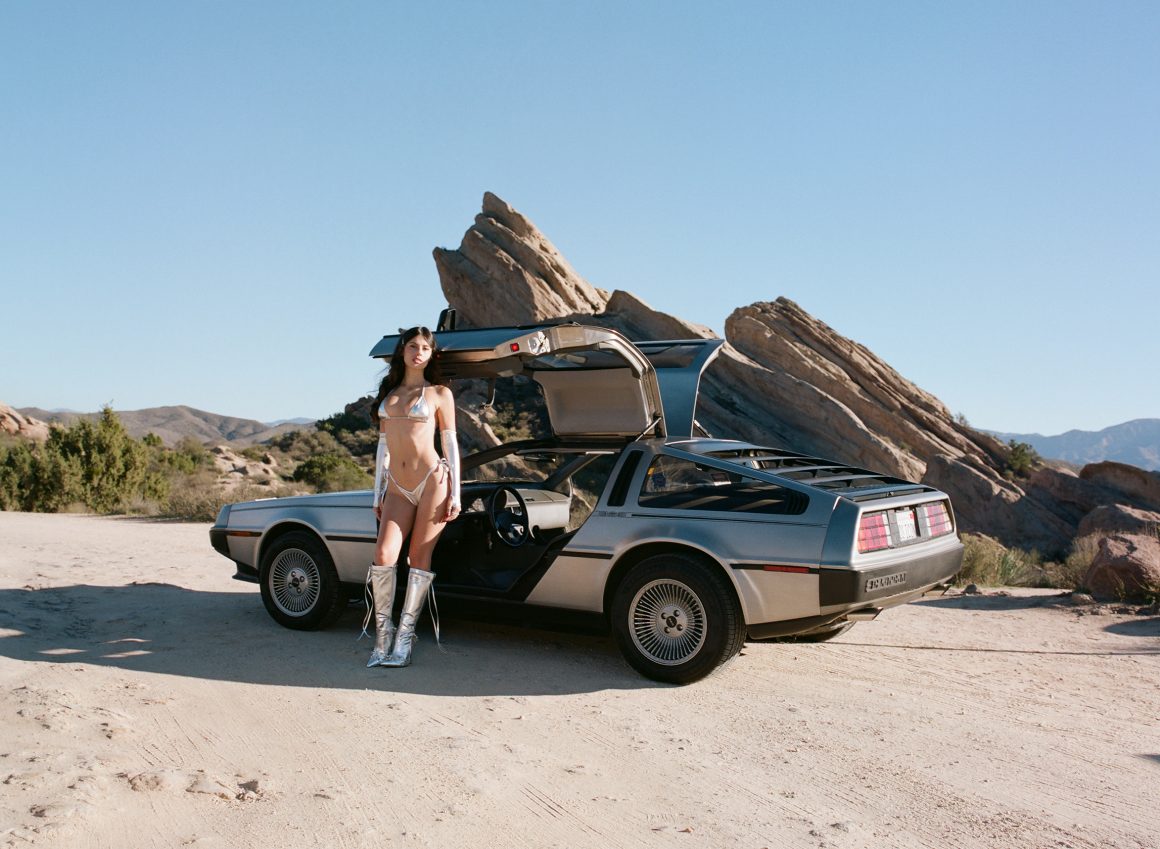
Nothing on the road looked like the DMC-12. Its brushed stainless-steel body panels and sharp geometric lines gave it an instantly futuristic presence, while the dramatic gullwing doors turned every entrance into a moment. Underneath, a fiberglass underbody and a rear-mounted 2.85-liter PRV V6 powered the car—not particularly quick, but paired with a Lotus-engineered chassis that delivered a confident, balanced drive. The DeLorean wasn’t about raw horsepower; it was about attitude. It was a statement piece disguised as a production car.
The car found its destiny not on the showroom floor, but on the silver screen. When Back to the Future hit theaters, the DMC-12 became more than a sports car—it became a cultural artifact. Its unconventional shape, its stainless-steel skin, and those unmistakable gullwing doors made it the perfect cinematic time machine. The film launched the DeLorean into permanent pop-culture orbit, turning a commercial failure into one of the most recognizable vehicles in movie history.
But behind the icon was a storm brewing. By the early 1980s, the company was drowning in financial trouble. In 1982, John DeLorean was caught in an FBI sting involving cocaine trafficking—an attempt, prosecutors claimed, to raise cash to keep the company alive. He was eventually acquitted after proving entrapment, but the scandal shattered investor confidence and sealed DMC’s fate. Production ended, the factory closed, and the DeLorean legend was left suspended between genius, ambition, and the controversy that consumed it.